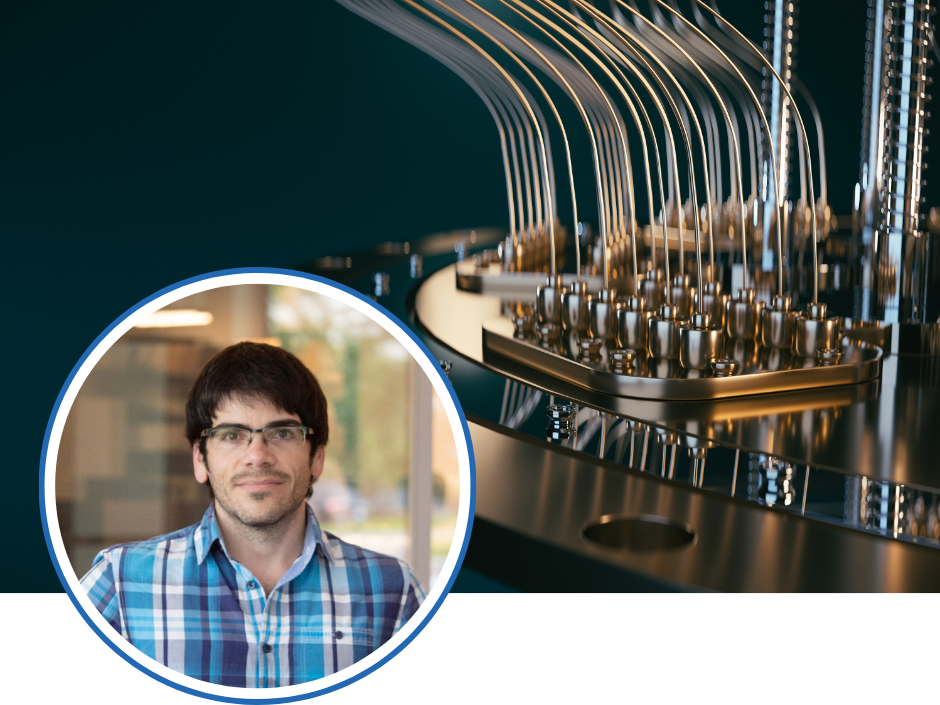
A critical assessment of the environmental performance of the WELL certification
Presentation of Marguerite Niquel’s research project
Master’s student

“Certifications should serve as a starting point to raise awareness and mobilize teams to achieve common goals of sustainability, excellence, and continuous improvement. Certification itself should not be viewed as an end goal or a marketing tool, but rather as a catalyst for change.”
Context
The construction sector is responsible for a significant amount of greenhouse gas emissions. In the face of climate change, it is essential to accelerate the ecological transition by designing sustainable and efficient buildings. Several certifications exist to help achieve these sustainability and performance objectives.

WELL certification is becoming more popular in Quebec every year because it ensures the well-being and comfort of building occupants.
Marguerite is a young woman of action deeply involved in her community. From the start of her career in building engineering, she has shown her leadership abilities by organizing a delegation to Greenbuild, one of the world’s largest events dedicated to sustainable building.
This activity is now part of the regular programming of the UdeS student chapter of the Bâtisseurs Écologiques de l’Avenir (BÉA) of Canada Green Building Council (CAGBC). |
|---|
The Project
In the context of reducing greenhouse gas emissions, it is crucial to measure the environmental impact of WELL certification, a task that has yet to be accomplished.
This is the mandate undertaken by Marguerite Niquel, LIRIDE’s student.
Over the coming months, she will analyze, using life cycle assessment (LCA), the aspects of WELL v2 certification that may have environmental impacts. Although parts such as the possibility of extending parental leave or access to mental health resources have a major social impact, they are not considered since their environmental impact is difficult to quantify.

Objectives
By the end of her project, Marguerite hopes to establish a ranking of optional components that will guide design teams to make informed, research-based decisions aimed at reducing the environmental impact of WELL-certified buildings.
At LIRIDE, she has found colleagues who enable her to contribute to research and develop her LCA skills.
Based on the community's needs, her research project allows her to meet people working in sustainable building. |
|---|
Discover the articles and publications of Marguerite Niquel :
About LIRIDE
Founded in 2013 under the direction of Professor Ben Amor, the Interdisciplinary Research Laboratory in Life Cycle Assessment and Circular Economy (LIRIDE), attached to the Faculty of Engineering at the University of Sherbrooke, stands out for its cutting-edge expertise in life cycle assessment, eco-design and circular economy, mainly in the field of materials, energy and construction. LIRIDE's expertise focuses on modeling and assessing the life-cycle impacts of a product or service. LIRIDE is internationally recognized for its scientific research.