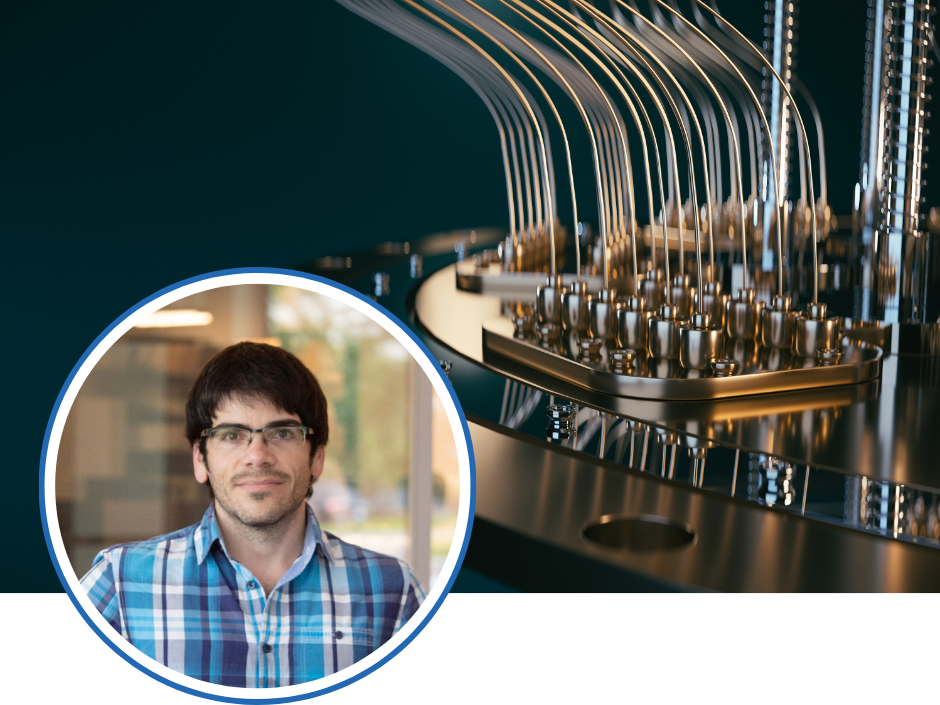
Assessing the Environmental Potential of Non-Technological Strategies for Decarbonizing
Presentation of Sogand Shahmohammadi’s research project
PhD candidate

"My research focuses on sustainability and sustainable construction because the building sector is one of the main contributors to global environmental problems. As researchers, we have a responsibility to study this issue and expand our knowledge. My goal is to help create a more sustainable future in the building sector."
Environmental impact of the building sector
In 2021, the building sector was responsible for 28% of the operational carbon emissions and 9% of embodied carbon emissions.
Strategies for reducing environmental impacts in buildings generally fall into two categories: technological and non-technological.
However, evidence shows that relying solely on technological strategies, such as using low-carbon materials, is insufficient to decarbonize buildings. Non-technological strategies, such as changing occupant behavior, must also be incorporated.

Originally from Iran, Sogand earned her bachelor’s and master’s degrees in architectural engineering in her home country. During her studies, she developed a passion for sustainable buildings, inspired by traditional Iranian architecture. This architecture emphasizes sustainability and uses local techniques and materials to create buildings perfectly adapted to climatic and environmental conditions. Motivated by this approach, profoundly anchored in the traditional Iranian architecture, Sogand pursued studies in sustainable buildings, which led her to life cycle assessment (LCA), an essential tool for evaluating the environmental impacts of buildings. After exploring this topic during her master’s degree, she wanted to deepen her knowledge. She decided to pursue her PhD at LIRIDE, where she is conducting in-depth LCA research to better understand and improve the sustainability of buildings. |
|---|
Beyond technology: transforming behaviors
Sogand’s project promotes non-technological strategies for decarbonizing buildings by assessing their environmental reduction potential compared to technological strategies.
LCA is used to identify existing gaps in literature and to conduct a complete analysis to measure the effectiveness of various non-technological low-carbon scenarios.
The results of this assessment inform stakeholders in the building sector about the promising potential of non-technological strategies for environmental reduction. These strategies are more cost-effective and quicker to implement than technological strategies. The results also raise awareness among occupants about the significant impact their behaviors and lifestyle choices have on promoting sustainability in the building sector. This encourages occupants to shift from a passive to an active role.
At LIRIDE, Sogand is deepening her expertise in LCA and broadening her horizons through her doctoral research on non-technological strategies for reducing building emissions.
She believes it is crucial not to limit oneself to the technological aspect because responsibility lies with everyone, including those who design and construct buildings, as well as those who occupy them. Research also plays a key role in influencing decision-making. Combining both non-technological and technological aspects is essential. |
|---|
Discover the articles and publications of Sogand Shahmohammadi :
About LIRIDE
Founded in 2013 under the direction of Professor Ben Amor, the Interdisciplinary Research Laboratory in Life Cycle Assessment and Circular Economy (LIRIDE), attached to the Faculty of Engineering at the University of Sherbrooke, stands out for its cutting-edge expertise in life cycle assessment, eco-design and circular economy, mainly in the field of materials, energy and construction. LIRIDE's expertise focuses on modeling and assessing the life-cycle impacts of a product or service. LIRIDE is internationally recognized for its scientific research.